
Packing Checklist for a Move in Dubai
Packing for a home move in Dubai requires a clear sequence to prevent your living space from becoming unusable weeks before move day. Following a practical packing checklist keeps your belongings organised, protects delicate items during transport, and simplifies unpacking at your new property.
A successful packing checklist for a move in Dubai works from the least-used areas to the most essential rooms, leaving bathrooms and the kitchen for last, keeping critical personal documents off the moving truck entirely, and packing a dedicated first-night box for immediate access upon arrival.
The Core Rule: Ordering Your Move from First to Last
Packing an entire apartment or villa without a plan leads to living among half-empty boxes and missing daily essentials. The most effective packing order moves systematically from low-activity areas to high-activity spaces.
- Storage and spare rooms: Items you do not use daily should be packed weeks in advance.
- Decor, books, and framed art: Decorative pieces can be packed early without disrupting your routine.
- Out-of-season wardrobes and formal wear: Pack clothing you will not need before move day.
- Secondary bedrooms and guest linens: Spare bedding and extra towels go next.
- Main bedroom and main wardrobe: Pack non-essential clothes, leaving only daily wear for the final days.
- Living room and entertainment electronics: Pack books, media, and secondary electronics first, keeping main screens accessible until shortly before move day.
- Kitchen and dining spaces: This section takes the longest to prepare properly and should be handled systematically over two or three days.
- Bathrooms and daily toiletries: Pack these items on the day before or the morning of the move.
- The First-Night Box: This container never goes onto the moving truck. Transport it in your personal vehicle.
Your first-night box should contain essential toiletries, charger cables, a change of clothes for each family member, basic medication, bed sheets, towels, a utility knife to open boxes, and basic snacks.
Room-by-Room Packing Checklist for Dubai
Storage Rooms, Decor, and Books
Begin with balcony storage, maid’s rooms, or spare cupboards. Sort through items to separate what you are taking from what can be donated or discarded.
When packing books and wall decor, use small, sturdy boxes. Books are dense; packing them into large containers makes the box impossible to lift safely and risks blowing out the cardboard base. Wrap framed artwork and mirrors individually in bubble wrap, securing corners with corrugated cardboard protectors. Place framed items on their edges inside medium boxes rather than laying them flat, as flat glass is far more prone to cracking under pressure.
Wardrobes, Clothing, and Bedding
Clothing requires two distinct packing approaches depending on garment type:
- Hanging clothes and formal wear: Standard folded packing creates deep creases in suits, dresses, and abayas. Use tall wardrobe boxes fitted with metal hanging bars. Clothes transfer directly from your closet to the box on their original hangers, protecting fabric structure and eliminating the need for pressing after your move.
- Folded clothes and casual wear: Pack these into medium boxes or clean suitcases. Line boxes with paper to protect garments from cardboard dust.
- Bedding, curtains, and pillows: Use large boxes or vacuum-seal bags for duvets, pillows, and extra sheets. These items are bulky but light, making them ideal fillers for large containers.
When requesting a quote on MoversInDubai.org, specifying whether you require wardrobe boxes or full packing services allows moving teams to arrive with the correct quantity of specialized hanging cartons.
Living Room and Electronics
Before unplugging any electronics, take clear photographs of the back panel of your television, sound system, and internet router. These photos serve as a quick visual guide when reconnecting cables in your new home.
Wrap electronic screens in clean bubble wrap, paying extra attention to the corners. Television screens should always be packed upright in flat screen boxes, never laid flat under other items. Bundle matched cables, place them in labelled sealable bags, and tape the bags directly to the corresponding device. Secure loose cabinet doors and drawer slides on TV stands with stretch film to prevent them from swinging open during transit.
Kitchen Essentials: Handling Fragile Items and Pantry Supplies
The kitchen takes longer to pack than any other room due to the volume of small, fragile, and irregularly shaped items. Allocate sufficient time and materials for this space.
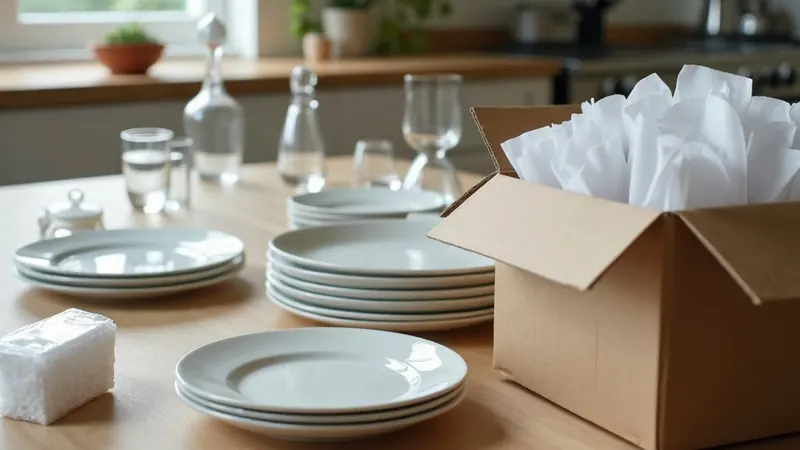
- Plates and saucers: Place a thick layer of crumpled packing paper at the bottom of a medium box. Wrap each plate individually in packing paper. Stand plates vertically on their edges inside the box, exactly as you would store them in a dish rack. Plates packed flat on top of one another break easily when the box experiences vertical shock. Fill all empty side gaps with tightly crumpled paper so nothing shifts.
- Glasses and stemware: Wrap each glass individually, rolling it tightly in paper and tucking excess material into the opening to reinforce the rim. Stand glasses upright on their bases in medium boxes. Place heavy glassware at the bottom and lighter stemware on an upper layer, separated by a sheet of corrugated cardboard.
- Small appliances: Drain water completely from coffee machines, steam irons, and water dispensers several days before packing to prevent leakage. Wrap power cords neatly and secure them to the appliance body.
- Pantry and liquids: Dispose of opened packages that cannot be properly sealed. Place open dry goods like flour, rice, and spices inside sealed plastic bags before putting them into boxes. Seal liquid bottles—such as cooking oil or sauces—by unscrewing the lid, wrapping plastic film over the bottle neck, and screwing the lid back on tightly.
Bathrooms, Liquids, and Personal Care
Bathrooms should be packed as close to move day as possible. Group shampoo, liquid soap, and cleaning supplies together. Ensure all bottle caps are tight, tape flip-tops down, and seal liquid containers inside plastic bags. Never pack hazardous cleaning chemicals or flammable aerosols in boxes intended for moving trucks.
Personal Documents and Valuables
Certain items must never be loaded into a moving truck, regardless of how securely they are boxed. Gather all critical personal items into a dedicated shoulder bag or locked briefcase that stays in your personal care at all times:
- Passports, Emirates IDs, birth certificates, and marriage certificates
- Property deeds, tenancy contracts, and Ejari documents
- Financial records, chequebooks, and bank cards
- Jewellery, luxury watches, and small heirlooms
- Laptops, tablets, and hard drives containing unbacked-up data
Selecting Packing Materials and the Inverse-Weight Rule
Using incorrect materials causes box failures, broken items, and unnecessary physical strain. The fundamental principle of efficient packing is the inverse-weight rule: box size should be inversely proportional to the weight of its contents.
| Material Type | Recommended Uses | Packing Rule |
|---|---|---|
| Small Heavy-Duty Box | Books, canned goods, heavy tools, small stoneware | Keep total weight manageable; small footprint prevents overload. |
| Medium Box | Kitchenware, decor, framed photos, shoes, toys | The versatile standard; ideal for balanced weight distribution. |
| Large Box | Bedding, pillows, towels, lampshades, winter jackets | Use exclusively for light, bulky items to prevent box collapse. |
| Wardrobe Box | Suits, formal dresses, ironed shirts, delicate outerwear | Transfer garments on hangers direct from closet to internal bar. |
| Bubble Wrap | Glassware, ceramics, electronic screens, delicate legs | Use bubble side inward against the item for maximum cushioning. |
| Packing Paper | Wrapping plates, filling empty box voids, wrapping cutlery | Superior to newspaper, which leaves black ink residue on items. |
| Stretch Film / Shrink Wrap | Securing cabinet doors, wrapping mattresses, bundling rugs | Protects surfaces from dust; holds loose drawers together. |
Box Labelling Protocol for Efficient Unpacking
A well-labelled box tells the moving team exactly where to place it in your new home without needing to ask.
Always write labels on the sides of the box rather than the top. When boxes are stacked two or three high against a wall, top labels become invisible, forcing you to unstack heavy boxes just to read where they belong.
A complete box label should include three details:
- Destination Room: (e.g., Master Bedroom, Kitchen, Guest Bathroom)
- Brief Content Summary: (e.g., Baking Dishes, Winter Shoes, TV Cables)
- Special Handling Notes: Mark FRAGILE or THIS SIDE UP in bold marker on at least two sides of delicate boxes.
When sending your details through MoversInDubai.org, noting whether your move involves high volumes of fragile items or custom requirements helps matched providers offer clear, accurate service details.
The Open-First Essentials Strategy: Securing Documents and Day-One Items
A frequent and frustrating oversight during a residential relocation is packing vital personal documents and immediate necessities inside standard moving boxes. When arrival at a new residence coincides with a long day of transit, searching through dozens of sealed containers for a phone charger, fresh linens, or critical paperwork creates avoidable stress.
To prevent this issue, establish an “Open-First” protocol before packing any room in your home. Divide your immediate necessities into two separate categories that you transport directly in your personal vehicle rather than on the transport truck.
First, assemble a dedicated document folder. This folder should contain your Emirates IDs, passports, signed tenancy agreements, security deposit receipts, and physical copies of your move-in approvals. Because entry procedures, security checks, and service elevator clearance protocols are determined individually by each building management office or community developer, you will often need to present documentation to security personnel upon arrival. Keeping these items on your person ensures smooth access at property gates without delaying the unloading process.
Second, pack a dedicated “Day-One” box or overnight suitcase for each household member. This container should hold everything required to function comfortably for the first 24 to 48 hours without opening general cargo. Essential items include:
- Basic toiletries, bath towels, and daily medications
- Phone and electronic device chargers
- One complete change of clothes and basic nightwear
- Essential bedding set (fitted sheet, pillows, and light blanket)
- Basic cleaning wipes, trash bags, and a utility knife for unsealing boxes later
Mark this box distinctly with bright tape or keep it entirely separate from the main packing zone. Communicating clearly with your hired transport crew to ensure these personal items are not loaded onto the truck maintains your immediate independence during the first evening in your new home. By treating your day-one essentials as a personal carry-on, you ensure a comfortable, organized transition regardless of how long unpacking the rest of the residence takes.
Managing Dubai Heat and Environmental Risks During Transit
The climate in Dubai introduces specific physical risks to packed belongings during transport. Even during short journeys across the city, temperatures inside locked truck cargo areas or parked loading bays can rise rapidly during midday hours.
- Candles and wax items: Paraffin and soy candles will soften or melt entirely if left in an unconditioned vehicle during summer months, destroying surrounding items. Pack candles together in a clearly marked box and transport them in your air-conditioned car.
- Cosmetics and toiletries: Heat causes creams, liquid foundations, and perfumes to separate or leak. Keep high-value cosmetics out of cargo holds.
- Sensitive electronics: Extreme heat can affect sensitive circuits and batteries. Do not leave laptops, tablets, or cameras sealed in boxes inside a hot vehicle overnight or during extended daytime staging.
- Leather furniture and fine art: Direct sunlight in loading bays can damage delicate leather or paint finishes. Confirm with your building management whether your property has covered loading areas, and schedule your move time to avoid peak midday sun exposure where possible.
By following this room-by-room sequence, choosing the right material for each item weight, and accounting for local environmental conditions, you can prepare your home effectively for move day. Moving requirements vary depending on property size and building access, so submitting your specific layout details when requesting a quote through MoversInDubai.org ensures you connect with moving services tailored to your move.
Frequently asked questions
What should I pack first when moving?
The rooms you use least — storage, spare rooms, books and decor. Kitchen and bathrooms go last because you need them until the final day, and the first-night box never goes on the truck at all.
What size box should I use?
Small boxes for heavy things and large boxes for light bulky things — the opposite of what most people do. A large box of books is unliftable and usually splits; a large box of cushions is easy.
How should boxes be labelled?
Room, a short contents note, and a fragile marker if needed — written on the side rather than the top, so you can read it when boxes are stacked. It saves far more time at the unpacking end than the packing end.